Blog

  • How to Write A Great Recipe Title

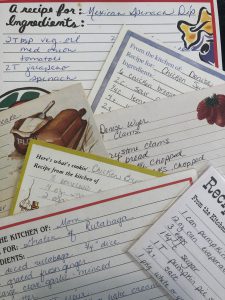
    Your recipe title is the single most important element of your recipe. This is because your title is a headline, and the headline in any type of content has one special and powerful property.

    Think about how you read a cookbook looking for a recipe to try.  You don’t start in the front and read every page like a novel then pick the one you want. No, you scan the pages looking for a photo or recipe title that catches your eye and looks interesting!

    Of all the elements in your recipe, the title has the greatest power for grabbing your readers’ attention and the greatest responsibility for enticing them to continue and read your recipe It follows that the better your title, the higher the chance of turning a recipe scanner into a recipe reader (and ultimately a recipe user).

    For a recipe title to be effective it needs to consider several things:

    Grab Attention – Like any headline you need to grab the readers attention.

    Describe the food being prepared – “Gruel” is one of my son’s favorite dishes, however it no one outside the family knows what it is. Including the main ingredient of the dish and even how it us prepared make the title more useful. “Baked Hamburger Gravy” would be a more descriptive title for our gruel.

    Be different and unique – If you have seen the recipe title before, it does not belong on your recipe!

    Include the source – In family cookbooks, certain people are associated with certain recipes. Grandma’s Apple Pie or Lou’s Lemon Bars help the reader image exactly what dish you are referring to. It just does not help anyone who is not at family gatherings!

    Sell the sizzle as well as the steak – This means to highlight the benefit, the reason why this recipe is worth making.

    Recipe titles that address cooking and eating needs are more likely to seduce the reader into the recipe itself. A good title clearly shows the reader which of their cooking and eating needs the recipe addresses. Every readers’ need is different. For example, it could be for something indulgent or something low fat, or something quick and easy or something sophisticated and thus involved, or something refined or something rustic.

    Consider the following recipe titles: ‘Soft and Chewy Chocolate Chip Cookies’, ‘Quick ‘n’ Easy Chocolate Chip Cookies’, ‘Grandma’s Favorite Chocolate Chip Cookies’, ‘Gluten Free Chocolate Chip Cookies’. Notice how each title addresses a different need and even appeals to different audiences. Quite simply, as the chocolate chip cookie examples show, it’s all down to the words you choose for your title.

    With a little thought and imagination, your recipe titles can stand out and make your readers give your recipes the attention they deserve.

    Bill Rice is founder and Co-Publisher of the Great Family Cookbook Project, a website that helps families and individuals collect and share food memories through customized printed cookbooks filled with treasured recipes. Follow us on Facebook and Pinterest!

  • The Best Cookie Recipes Can Be Frozen

    The Best Cookie Recipes Can Be Frozen

    In our house, there is nothing like a warm, soft cookie right out of the oven. However since it is not practical to make dough for only a few cookies at a time, the next best thing is to freeze your cookie dough and pull out enough cookies for your immediate needs.

    Freezing cookies also provides time saving opportunities when you want to get ready for a holiday cookie swap in October or getting ready for a school bake sale anytime.

    How you best freeze cookies depends on what type of cookie you are making. The FamilyCookbook Project had collected thousands of cookie recipes if you need a suggestion.

    Cookies like chocolate chip and oatmeal-raisin freeze best if you make the actual cookie beforehand. Scoop out the dough just as if you were about to bake it and place it on a baking sheet lined with parchment or a Silpat (they can be close, but not touching). Instead of putting it into the oven, but them into the freezer for atleast 6 hours instead. Once frozen, the dough balls get sealed inside a plastic freezer bag and when it is time to bake, you are ready to go.

    Cookies like shortbread or sandies, or any smooth slice-and-bake cookies can be pressed into logs, wrapped in wax paper and frozen solid. Prepare the dough as usual, then shape it into one or two logs that can be covered with wax paper and placed in a plastic freezer bag. When you’re ready to bake, let them warm on the counter for 10 to 15 minutes before slicing. You might also want to let the logs thaw in the fridge for a few hours before you’re ready to use the dough. Slice the cookies into thick disks and you’re ready to put them in the oven as usual.

    The third type of cookies that can be frozen are cut-out cookies, like sugar cookies and many holiday cookies. The dough for these cookies can be frozen in disks and then stacked together with wax paper between them. When ready to bake, thaw until bendable and continue with the recipe.

    Most frozen cookies will need an extra minute or two in the oven. Otherwise, prepping and baking the cookies is exactly the same as in the recipe.


    Bill Rice is founder and Co-Publisher of the Great Family Cookbook Project, a website that helps families and individuals collect and share food memories through customized printed cookbooks filled with treasured recipes. Follow us on Facebook and Pinterest!

  • Foodie Gifts You Can Still Get in Time for Christmas

    The website Smart Traveler has named Family Cookbook Project software to it’s 40 Best Foodie Gifts You Can Still Get in Time for Christmas. Not only do family cookbooks filled with personal recipes make a great gift, but giving someone you love the gift of Family Cookbook Project allows them to create their own treasured cookbook!


  • Using Standard Measurements for Your Recipes

    Using Standard Measurements for Your Recipes

    For many generations, recipes were handed down by word of mouth from mother to daughter. Recipes consisted of a little of this and a smidgin of that. The food always came our great – or at least that is what we told out mothers!

    Today things are different. Computers make is easy to write down our recipes and share them with friends and family members over the Internet. However it is important to remember that cooking has a language of its own. It is a language of ingredients and measurements and directions. I believe the most important of these is measurements. If we did not have standard measurements for cooking, “T” could be a teaspoon, a tablespoons, a thimble full or a truck load! Here are a list of Standard Measures Abbreviations commonly used in recipes.

    teaspoon……………………… tsp.
    tablespoon…………………… tbsp. or T.
    cup…………………………….. c.
    quart…………………………… qt.
    ounce…………………………. oz.
    pint…………………………….. pt.
    gallon…………………………. gal.
    inch…………………………….. in.
    pound………………………….. lb.
    milliliter…………………………. ml
    liter……………………………….. L
    milligram……………………….. mg
    gram……………………………… g
    kilogram ……………………….. kg
    millimeter……………………… mm
    centimeter…………………….. cm
    meter……………………………. m
    Celsius…………………………… C
    Fahrenheit……………………. F

    Another important thing about standard measurements is that they don’t work if you don’t use them! Including an ingredient in your recipe without a specific amount is likely to leave someone trying the recipe for the first time scratching their head and wondering what to do. Remember know one will know unless you include it in your recipe.

    Bill Rice is founder and Co-Publisher of the Great Family Cookbook Project, a website that helps families and individuals collect and share food memories through customized printed cookbooks filled with treasured recipes. Follow us on Facebook and Pinterest!

  • Rating Your Favorite Recipes

    Creating a printed personal cookbook on FamilyCookbookProject.com can be a rewarding experience, but your interaction with the website does not have to stop there.

    A majority of people who have created cookbooks continue to use the website as an online resource either from their desktop computer or by using our “award-winning” mobile app.

    One fun thing to do is to rate the recipes you use from your cookbook.

    Rating recipes is easy. Go to the “view recipes by contributor” and find the favorite recipe that you have added to the cookbook so far. Click on the title of the recipe to view it.  Right under the title is something that says “Rate this recipe” and 5 gray stars. To rate this recipe, simply click on the last star of your score. So if you think it is a “5 star” recipe, click on the last star. If it is a “4 star” recipe, click on the fourth star and so on.

    You can also click in between to stars to give it a 4.5 star rating!

    The next person who views the recipe will see your rating (although they will not know it came from you) and will be able to leave their own rating.

    Over time you will see how many people rated your recipes and how much they liked them. It is one more way FamilyCookbookProject.com helps to build a dialog around your recipes.

    Give it a try today and invite the others in your cookbook to do the same!

  • 5 Ways To Improve Your Family Cookbook Over The Holidays

    The holidays are a time when we get all of our family together and celebrate together with food, fun and festivities. It is also a great time to motivate others in the family to contribute to your family cookbook project.

    Here are some ideas to help you work on your cookbook during the holidays:

    • When you see family members, remember to talk about the cookbook and how excited you are as it moves forward. Others will see your enthusiasm and be more willing to help contribute.
    • When someone brings a delicious dish to a family gathering – ask for the recipe. People are often proud of their food creations and love to share recipes. If they don’t have it with them, let them know contributing recipes is easy on the FamilyCookbookProject.com website. Encourage them to give it a try.
    • Take photos of all the great food being shared. Photos of dishes really bring recipes to life. Photos can be easily added to your recipes on FamilyCookbookProject.com and can or do not have to be included in the printed version.
    • Ask for suggestions for the cookbook cover and recipe layout design. FamilyCookbookProject.com currently has more than 50 cookbook covers to choose from including your own custom cover – with more on the way. It also allows you to select from 15 different recipe layout options. Print a hardcopy of several of the designs and ask family members what they think. Not only will the choice be easier to make with feedback, but you will get them more interested in contributing to the cookbook.
    • Use the index to show family members the recipes in the cookbook. If you’re close to having your cookbook completed, bring the cookbook’s index and a cover page printed from your printer to family holiday events. Show it around and let people see who and what has been submitted already. Maybe they will see a recipe that is missing and want to contribute or maybe they will place an advance order for the final edition.

    With so much time spend in the kitchen around the holidays, it’s no wonder that cooking and recipes and cookbooks and food are talked about constantly as everyone pitches in to prepare our holiday get together. Creating your family cookbook will become a valuable resource for generations to come.


    Bill Rice is Co-Publisher of the Great Family Cookbook Project, a website that helps families and individuals collect and share food memories. Follow us on Facebook and Pinterest!

  • A Mother’s Gift

    We owe our mothers so much. They give us life, they nurture us, feed us and teach us.

    Our mothers are also often our first teachers in the kitchen. From them we learn table manners, what a family meal is and how it brings us all together. Our lessons start when we watch and mimic what we see in the kitchen and at the dinner table. As we grow and understand, we are taught by being allowed to become a “mother’s helper” and do some of the simpler tasks of getting the family meal prepared. Later in life, we use all of the years of learning by contributing our favorite family dishes when the family gathers at holidays, taking some of the pressure off of our mothers.

    As a mom, it is important to pass those life skills on to our children so they have the same foundation in the kitchen that we learned from our parents.

    Here are some simple ideas to consider when teaching the next generation how to prepare the family meal:

    Teach measurements– Find tasks for young ones that allow them to stay in one location, but keep them busy. Give them a measuring spoon and ask them to count how many teaspoons are in a cup of flour or water. Once they fill the cup, use it in your recipe.

    Name the tools – Many of the tools of the trade in the kitchen have specific names and specific uses. Teach the names of the tool as well as their purpose in preparing the meal. That way when you ask for a wisk you don’t get a potato masher!

    Plan meals together– For most families, dinner usually includes a main dish or entre, a side dish or two providing a starch and vegetable, and if we are lucky a dessert. Discuss why certain side dishes go together and how to plan a well-balanced meal.

    Use recipes – Many mothers have made their favorite family recipes so many times, that they don’t even use a recipe any more or they never had one from their mother. Trial and error can come later, to start have a set of family recipes that can be used to provide step by step instructions to a young chef. If you don’t have them, write them down as you make a dish and start collecting them.

    A great way to help mom collect and share her family recipes is to help her create a family cookbook. The Family Cookbook Project (www.FamilyCookbookProject.com) offers a gift certificate that can printed out and included in a Mother’s Day card. This gift will help any mom create an easy online family cookbook that can then be printed and shared for generations to come.

    Mom’s can also give themselves a gift to help preserve their family food traditions. By creating a family cookbook and collecting your family recipes, you will be creating a helpful guide for future generations.

    Bill Rice is Co-Publisher of the Great Family Cookbook Project, a website that helps families and individuals collect and share food memories. Follow us on Facebook and Pinterest!

  • Deadline to Print for Christmas Delivery

    If you are planning to use your cookbooks as Christmas gifts this year, you have just about 2 weeks until the Christmas print deadline.

    If you plan to have your cookbooks printed by us and in your hands by Christmas, the deadline to order and make payment is Monday, November 30th. There will be an extended deadline, but expedited shipping will be required. Let us know if we can help!

    With the pandemic quarantine , so many people had extra time on their hands and put it to good use and worked on their cookbooks. We are now seeing historic levels of editors submitting cookbooks for printing already. So don’t wait until the 30th if you can get your cookbook submitted earlier.

    The earlier your cookbook order is in production, the earlier you will receive your cookbooks!

  • Freezing Cookie Dough Saves Time

    In our house, there is nothing like a warm, soft cookie right out of the oven. However since it is not practical to make dough for only a few cookies at a time, the next best thing is to freeze your cookie dough and pull out enough cookies for your immediate needs.


    Freezing cookies also provides time saving opportunities when you want to get ready for a holiday cookie swap in November or getting ready for a school bake sale anytime.

    How you best freeze cookies depends on what type of cookie you are making. The FamilyCookbook Project had collected thousands of cookie recipes if you need a suggestion.

    Cookies like chocolate chip and oatmeal-raisin freeze best if you make the actual cookie beforehand. Scoop out the dough just as if you were about to bake it and place it on a baking sheet lined with parchment or a Silpat (they can be close, but not touching). Instead of putting it into the oven, but them into the freezer for at least 6 hours instead. Once frozen, the dough balls get sealed inside a plastic freezer bag and when it is time to bake, you are ready to go.

    Cookies like shortbread or sandies, or any smooth slice-and-bake cookies can be pressed into logs, wrapped in wax paper and frozen solid. Prepare the dough as usual, then shape it into one or two logs that can be covered with wax paper and placed in a plastic freezer bag. When you’re ready to bake, let them warm on the counter for 10 to 15 minutes before slicing. You might also want to let the logs thaw in the fridge for a few hours before you’re ready to use the dough. Slice the cookies into thick disks and you’re ready to put them in the oven as usual.

    The third type of cookies that can be frozen are cut-out cookies, like sugar cookies and many holiday cookies. The dough for these cookies can be frozen in disks and then stacked together with wax paper between them. When ready to bake, thaw until bendable and continue with the recipe.

    Most frozen cookies will need an extra minute or two in the oven. Otherwise, prepping and baking the cookies is exactly the same as in the recipe.


    Bill Rice is Co-Publisher of the Great Family Cookbook Project, a website that helps families and individuals collect and share food memories. Follow us on Facebook and Pinterest!