Category: Food for Thought

  • What Users are Saying About FamilyCookbookProject.com

    During our recent survey of more than 2,000 cookbook editors, we asked them to please tell us in their own words about your experience creating a family cookbook with Familycookbookproject.com. Here are what some of them said:


    It is a delight looking through The Matthews Family Cookbook Project. My Mom passed away recently and it always brings a smile to my face seeing her recipes in print.–Amy Spino

    It was a lot of work, but I had a great time putting it together. Didn’t advertise, just let locals know via FB. Was overwhelmed with compliments and sales. Received many letters thanking me for doing this cookbook. So pleased with the results and plan to do a Vol.III and offer to sell through stores, etc. So much fun! – Linda, Favorite Recipes from Wardell Party Home, Vol. 2

    We sold 526 cookbooks in 14 months and made a net profit of $5,172. Mr Lowell was quick to respond to my questions. The cookbook was completed in 3 months, 461 recipes. The funds allowed us to support many of our outreach programs. I highly recommend familycookbookproject.com.– Glendale Christian Church Ladies Circle Cookbook, Donna, Editor.

    The Eaton, Jorae, & Plunkett Reunion Remembrances Cookbook was done to celebrate the 100th year our Eaton descendants coming together. We decided that a cookbook and bookmarks were the winners over t-shirts, hats, mugs, etc. Everyone was invited to participate and directions were shared. It was a labor of love. With Gail as our’ editor, Family Cookbook Project guided us and our cookbook was published with ease. Thank you, guys

    Creating my cookbook was fun and easy! My family and I completed ours together as a memorial to my grandfather who was an amazing baker. During the process we were able to share stories of growing up in his kitchen and now we have those to pass on to the next generation.

    I had been looking for an affordable cookbook site to compile a family cookbook as a gift to my grandchildren, nieces, nephews and cousins. This is the first site I found that could fill my needs. The site is user-friendly, provides easy editing and numerous options. When I had a couple of questions, I received a surprisingly quick response. I haven’t completed the book but am enjoying the process.

    I created one for my family and friends. When I talked about how much we enjoyed it with my church family, they wanted to do one for the church.

    This was a great way to assemble family favorites and connect personal stories and memories to each. It was a gift of good taste and memories that I could leave to my family since I had been diagnosed with a serious illness last summer…..book and I am still here! Great Christmas gift! – Lore of the Mmmm, Yumm, Funn Family Cookbook


    The Family Cookbook Project is dedicated to helping individuals and families collect and preserve the time-honored recipes that are so important to our family traditions. This website has helped thousands of families and groups coordinate the creation of personalized cookbooks by provides step-by-step instructions and online tools to create a valuable family heirloom.  Personalized cookbooks are also used by schools and church groups as important fundraisers. Start your own cookbook today at www.FamilyCookbookProject.com.


  • How to Bold Text in a Family Cookbook Recipe

    Have you ever wanted to call everyone’s attention to a specific line an a recipe?

    Do not cook longer than 10 minutes!

    Add ingredients in this specific order!

    Do not preheat your oven!

    Certain directions are critical to the outcome of a favorite dish and Family Cookbook Project as made it easy if you want to bold your text in a recipe.  You just have to learn HTML or Hyper Text Markup Language, the programming language of every website on the Internet.

    Now before you say “I’m not a computer programmer, I can barely turn on my laptop”. It’s super easy for what you want to do.

    In directions, comments and ingredients when you are adding a new recipe, you can use simple HTML tags like:

    <b>BOLD</b>
    <i>Italic</i>
    <u>Underline</u>

    Replace the word between the tags with what you want to appear in that format. It’s as simple as that!

    For example <b>Do not cook longer than 10 minutes!</b> looks like this Do not cook longer than 10 minutes!

    If you use Do not cook longer than 10 minutes! it will look like this Do not cook longer than 10 minutes!

    and if you use <u>Do not cook longer than 10 minutes!</u> it will look like this Do not cook longer than 10 minutes!

    The most important thing to remember is that all tags start with “<>” and end with a “</>”. If you forget the /> then every thing else in your recipe will be based on the tag you used. Don’t forget your “</>”!

    Family Cookbook Project is always looking for ways to make your favorite recipes come to life for you and your family.


    Bill Rice is founder and Co-Publisher of the Great Family Cookbook Project, a website that helps families and individuals collect and share food memories through customized printed cookbooks filled with treasured recipes. Follow us on Facebook and Pinterest!

  • The best cookie recipes can be frozen and used as needed

    In our house, there is nothing like a warm, soft cookie right out of the oven. However since it is not practical to make dough for only a few cookies at a time, the next best thing is to freeze your cookie dough and pull out enough cookies for your immediate needs.
    Freezing cookies also provides time saving opportunities when you want to get ready for a holiday cookie swap in October or getting ready for a school bake sale anytime.

    How you best freeze cookies depends on what type of cookie you are making. The FamilyCookbook Project had collected thousands of cookie recipes if you need a suggestion.

    Cookies like chocolate chip and oatmeal-raisin freeze best if you make the actual cookie beforehand. Scoop out the dough just as if you were about to bake it and place it on a baking sheet lined with parchment or a Silpat (they can be close, but not touching). Instead of putting it into the oven, but them into the freezer for atleast 6 hours instead. Once frozen, the dough balls get sealed inside a plastic freezer bag and when it is time to bake, you are ready to go.

    Cookies like shortbread or sandies, or any smooth slice-and-bake cookies can be pressed into logs, wrapped in wax paper and frozen solid. Prepare the dough as usual, then shape it into one or two logs that can be covered with wax paper and placed in a plastic freezer bag. When you’re ready to bake, let them warm on the counter for 10 to 15 minutes before slicing. You might also want to let the logs thaw in the fridge for a few hours before you’re ready to use the dough. Slice the cookies into thick disks and you’re ready to put them in the oven as usual.

    The third type of cookies that can be frozen are cut-out cookies, like sugar cookies and many holiday cookies. The dough for these cookies can be frozen in disks and then stacked together with wax paper between them. When ready to bake, thaw until bendable and continue with the recipe.

    Most frozen cookies will need an extra minute or two in the oven. Otherwise, prepping and baking the cookies is exactly the same as in the recipe.


    Bill Rice is founder and Co-Publisher of the Great Family Cookbook Project, a website that helps families and individuals collect and share food memories through customized printed cookbooks filled with treasured recipes. Follow us on Facebook and Pinterest!

  • How to Take Great Food Photos for Your Recipes

    They say a picture is worth a thousand words and with recipes that is especially true.

    It’s wonderful to read a list of ingredients and see the potential in a recipe, but to look at the finished product can make your mouth water!

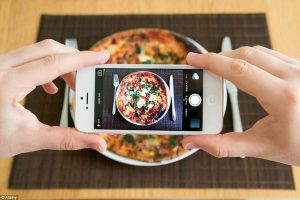
    Family Cookbook Project highly recommends adding a photo to every recipe you can in your online cookbook. It helps people to see what to expect when they follow your recipe and gives them a standard to meet when comparing their finished dish to the original.

    With the advent of digital camera built into cell phones, you don’t have to be a professional photographer to take good food photos.

    Here are some pointers to help improve your recipe photos:

    Use Natural Light – Make sure that the light is right – shoot the food either next to a bright window or under a pendant light in the restaurant. Don’t use your camera’s flash! Set your dish near a window and turn off any artificial lights that might be on nearby. Try to photograph with the light at your back or to the side of a dish, so that the shadows are to the side or behind it. 

    Hold Still – Taking photos inside, even with ample natural light, often means you have to hold the camera very still to keep it from registering hand shake. If you have a tripod, that’s ideal. If you don’t, you can duplicate the tripod effect by resting your elbows on the table or counter and using them to stabilize the camera. Moving the camera when taking a photo will only lead to blurry unusable photos. 

    Get close to the food! – Don’t stand back three feet and get the food with the stove, the dirty dishes, and all the condiments around it. Move in and get up close and personal, and let the pan…or the plate…or the cutting board fill the frame.  

    Stage the shot – The food isn’t the only thing in the photo. Using plates, silverware and linens in complementary colors can help your dish come alive. Shoot food on a beautiful plate or on a table with texture and character. The more appetizing the ingredients, the better your photo will be. Plates that contain colored vegetables and/or meat, preferably in light-colored sauces, are often the most appealing to the eye in photos. Also Don’t be Afraid of a mess. A few crumbs or a smear of dressing can be beautiful, if you let them. 

    Focus on the food –  If you are using a DSLR, stop down your lens to f/1.8 or f/2.0 that limits your depth of field to one part of the image only, blurring out everything around the subject, simulating a shot taken with a macro lens. If you are using an iPhone, there are apps, such as Camera+ or VSCO Cam, that will create the same effect. Remember, you want the food to be the main focus, not the background. 

    Try different angles –  Get up over the food and shoot straight down on it. When shooting overheads, if appropriate, try filling up the frame with what’s already on the table such as cups, wine glasses, utensils and moving hands. You can also  think in three dimensions, You might not usually serve brownies piled in a vertical column, but stacking any flat food, like pancakes, cookies, or even onion rings, is a great way to show off texture and make the photo more appealing. You can also add dimension to your food photos by showing the dish right after the that first bite is taken, or the second and third. These are little details that make a viewer feel like they’ve sat down and are enjoying the meal. 

    Get Close to Ugly Foods  – Some foods, no matter how good they taste, just don’t make good photos. But the closer you get to your subject, the more the visual story becomes about texture and color, rather than pure mouth-watering beauty.Avoid foods that are white and gloppy, such as congealed gravy on white pasty mashed potatoes. 

    Size Matters –  Make sure your camera settings are set for a good sized photo. Small photos look blurry when they are enlarged on line. A photo viewed online only has to be 72 dpi (dots per inch, the measure for quality), but if you are going to print your photo, you want it to be at least 300 dpi. 600 pixels wide (a measurement for size) is a good target for minimum photo size.

    Using other’s photos – It is important to note that the Internet makes it easy to find photos of recipes already taken. While this might be much easier, the photo still is the property of whomever holds the rights. Don’t always assume that because a photo is on the Internet you can simply use it for your recipe. Make sure you ask permission from the owner before you use it.


    Bill Rice takes more than 20,000 photos a year and is Co-Publisher of the Great Family Cookbook Project Project, a website that helps families and individuals collect and share food memories. Follow us on Facebook and Pinterest!

  • Cookbook Survey: Who Is The Typical Cookbook Editor?

    Family Cookbook Project  has been helping individuals and families create and print cherished customized cookbooks full of their own personal recipes. We thought it would be interesting to learn more about the typical person who wanted to create a cookbook.

    Earlier this year, we surveyed 2,041 Cookbook Editors and here are some of the findings related to who is the typical cookbook editor.

    In terms of demographics, 91% of the cookbook editors are female and 75.58% are over the age of 50. In terms of their computer skills, 92% reported to have had at least good computer skills.


    Why did you create your family cookbook project? *

    70% To save family recipes for future generations

    34.58% To create one source for all my recipes

    34.15% To give as gifts

    21.82% To bring my family together

    20.22% Because it was fun

    * Participants were able to provide more than one answer so total does not equal 100%.


    Approximately how many contributors, including yourself, added recipes to your cookbook?


    28.66% Editor was only contributor

    51% had between 2-9

    9% has 20 or more


    Approximately how long did it take you to collect your recipes?

    12% less than 4 weeks

    29.34% 1-4 months

    43.8% more than 1 year


    Views on FamilyCookbookProject.com

    When asked how they would rate their experience with Familycookbookproject.com, an astounding 94.28% said they had a good or better experience with 32.68% of cookbook editors responding Excellent.

    When asked to rate the various aspects of the Family Cookbook Project, Receiving highest marks (Above average or Exceptional) were:

    Add a Recipe page (71.83%)

    Web site ease of use (71.33%)

    Choice of covers (56.62%)

    Overall customer service (55.60%)

    Invitation tool to email contributors (50.13%)

    Of the items that had the highest negative score (Somewhat below average or below average) were Choice of covers (9.33), Choice on recipe layouts (7.12%) and Photo tool (6.84).

    We also asked the cookbook editors the true test of how they liked the process of creating a personal cookbook using FamilyCookbookProject.com – If you had to do it all over again, would you use familycookbookproject.com to collect, organize and print your family cook book?

    95.86% would use familycookbookproject.com again to create their customized cookbooks full of treasured recipes. A full 74.8% replied Absolutely, the top answer. Only 4% said no they would not create a cookbook if they had to do it all over again.

    Over the next few weeks we will release more results from the 2019 Family Cookbook Project Editors Survey.


    Bill Rice is founder and Co-Publisher of the Great Family Cookbook Project, a website that helps families and individuals collect and share food memories through customized printed cookbooks filled with treasured recipes. Follow us on Facebook and Pinterest!

  • The Best Time to Start a Family Cookbook – The Holidays

    To most of us, the year-end holidays are a time of family, friends and a lot of food.  While these times can be hectic with all of the running around that needs to be done, it is also the best time to start a family cookbook project says one expert.

    “Many of the family holiday traditions start in the kitchen and center around the meals we serve our family and guests at this time of the year, says William Rice, Founder and Co-Publisher of the Great Family Cookbook Project. “What better way to celebrate our family food traditions than to preserve them for future generations in a family cookbook. There is no better time to start planning a family cookbook than over a wonderful meal during the holidays”.

    A successful family cookbook needs at least one dedicated individual to lead the project as editor. This person gets the project off the ground and invites family members to contribute recipes.  Once a labor intensive task, now families are using the Internet to simplify the project.  “A website, such as www.familycookbookproject.com, can provide step by step instructions and tools to help the family member serving as cookbook editor to contact others and encourage them to enter their favorite recipes directly into the online system,” says  Rice “The editor then simply reviews and edits the recipes, selects printing options, and sends the cookbook to be printed.  The finished printed cookbooks are received in a few weeks time and can be enjoyed and preserved forever.”

    Here are some tips from Familycookbookproject.com to help make your family’s personalized cookbook a success:

    Start talking about the project over dinner – Enjoying the food and dishes we love while being asked to contribute recipes will make the value of the project more real and worthwhile.

    Have a sign up list for those who want to participate – Get everyone’s telephone number and email address in one place. This will help when it is time to be in contact with them over the project.

    Pass out recipe forms after the meal – Having printed recipe forms lets people know what they need to provide and shows them how little work contributing will be.

    Invite everyone to participate – Don’t just invite the family cooks. Everyone has at least one recipe that they can contribute to the cookbook. Use email to invite and stay in touch with contributors. Let them see what others have submitted to encourage them to keep adding their best recipes.

    Set a deadline – Set a deadline one or two month in the future to have all of your recipes submitted. Most people work better if they know they face a hard deadline. If you don’t have enough recipes at the deadline, you can always extend it.

    Keep in touch – After the holidays, keep in touch with everyone via email. Send regular updates and let then know who is participating and who is not.  Set a goal to have every family member contribute at least one recipe so they can be listed in the list of contributors.

    Consider using a Website, like Familycookbookproject.com, to help organize your family cookbook. Here are just some of the benefits of www.FamilyCookbookProject.com:

    – Editors can send contributors an email to invite them to participate in the family cookbook.  The site also makes it easy to send regular updates by email to some or all of the contributors.

    – Allows individuals to enter their recipes directly into the online family cookbook so it does not fall entirely on the editor.

    – Provides an easy way to share recipes online. Contributors have access to everyone’s recipes even before the final family cookbook is printed.

    – Provides many options for recipe layout and cover selections or allows you to create your own cover.

    Family cookbooks are an important way to preserve our mealtime traditions for future generations. With the passing of our loved ones comes the loss of treasured food traditions. A family cookbook ensures that the recipes from one generation can be passed on to the next as a treasured family heirloom. Once the recipes are preserved online, they can be shared with other family members by email, printed individual and included in your own professionally printed cookbook.

    For more information on how your family can make a family cookbook, go to www.familycookbookproject.com.

    About the Great Family Cookbook Project

    The Family Cookbook Project is dedicated to helping individuals and families collect and preserve the time-honored recipes that are so important to our family traditions. The Family Cookbook Project (www.familycookbookproject.com) was recently named the Best Family Website by the Web Marketing Association’s WebAward Competition for the second year in a row.  The website has helped thousands of families and groups coordinate the creation of personalized cookbooks by provides step-by-step instructions and online tools to create a valuable family heirloom.  Personalized cookbooks are also used by schools and church groups as important fundraisers.

  • How to Write A Great Recipe Title

    Your recipe title is the single most important element of your recipe. This is because your title is a headline, and the headline in any type of content has one special and powerful property.

    Think about how you read a cookbook looking for a recipe to try.  You don’t start in the front and read every page like a novel then pick the one you want. No, you scan the pages looking for a photo or recipe title that catches your eye and looks interesting!

    Of all the elements in your recipe, the title has the greatest power for grabbing your readers’ attention and the greatest responsibility for enticing them to continue and read your recipe It follows that the better your title, the higher the chance of turning a recipe scanner into a recipe reader (and ultimately a recipe user).

    For a recipe title to be effective it needs to consider several things:

    Grab Attention – Like any headline you need to grab the readers attention.

    Describe the food being prepared – “Gruel” is one of my son’s favorite dishes, however it no one outside the family knows what it is. Including the main ingredient of the dish and even how it us prepared make the title more useful. “Baked Hamburger Gravy” would be a more descriptive title for our gruel.

    Be different and unique – If you have seen the recipe title before, it does not belong on your recipe!

    Include the source – In family cookbooks, certain people are associated with certain recipes. Grandma’s Apple Pie or Lou’s Lemon Bars help the reader image exactly what dish you are referring to. It just does not help anyone who is not at family gatherings!

    Sell the sizzle as well as the steak – This means to highlight the benefit, the reason why this recipe is worth making.

    Recipe titles that address cooking and eating needs are more likely to seduce the reader into the recipe itself. A good title clearly shows the reader which of their cooking and eating needs the recipe addresses. Every readers’ need is different. For example, it could be for something indulgent or something low fat, or something quick and easy or something sophisticated and thus involved, or something refined or something rustic.

    Consider the following recipe titles: ‘Soft and Chewy Chocolate Chip Cookies’, ‘Quick ‘n’ Easy Chocolate Chip Cookies’, ‘Grandma’s Favorite Chocolate Chip Cookies’, ‘Gluten Free Chocolate Chip Cookies’. Notice how each title addresses a different need and even appeals to different audiences. Quite simply, as the chocolate chip cookie examples show, it’s all down to the words you choose for your title.

    With a little thought and imagination, your recipe titles can stand out and make your readers give your recipes the attention they deserve.

    Bill Rice is founder and Co-Publisher of the Great Family Cookbook Project, a website that helps families and individuals collect and share food memories through customized printed cookbooks filled with treasured recipes. Follow us on Facebook and Pinterest!

  • Cookbooks for Kids

    One of the reasons we works so hard on a family cookbook is to preserve our favorite recipes for future generations. It is equally important to help that next generation develop a love of good food and cooking at an early age. That is why Family Cookbook Project created a simple cookbook just for the kids in your life.

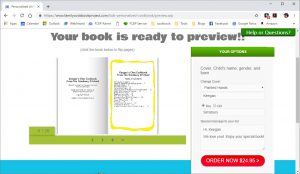
    Kids Cookbook Project lets you create your own customized cookbook for the special little one in your life. Simply enter your  child’s name and choose boy or girl and immediately preview them in their own special personalized Cookbook! We will then print your full color customized, personalized kids cookbook. It’s just $24.95.

    Keep Kids Interested in Reading …put them in the story! Every child loves a story. A good story helps them to explore their imagination. A great story has them as the main character and holds their interest in reading. That’s what we do! …Kids Cookbook Project makes great stories about children with your child as the main character. And we make it easy and simple to do …as simple as 1-2-3.

    As the holiday’s approach, this would make a great personalized gift for the youngsters in your life. To learn more and to order. visit Kids Cookbook Project.


    Bill Rice is Co-Publisher of the Great Family Cookbook Project, a website that helps families and individuals collect and share food memories. Follow us on Facebook and Pinterest!

  • Family Cookbook Project Now offers WW SmartPoints on recipes

    Family Cookbook Project, an online leader in the creation of personalized printed cookbooks, has added the ability to include WW SmartPoints® on recipes being added to a user’s collection of recipes.

    WW (formerly Weight Watchers) SmartPoints* is a system where every food and drink is assigned a point value, and you receive a certain number of SmartPoints to allocate however you’d like every day and week. SmartPoints is designed to help guide you to a healthier pattern of eating every day.

    “Living a health lifestyle and eating right is what WW SmartPoints are all about,” says Bill Rice, Founder and Co-Publisher of the Family Cookbook Project. “Family Cookbook Project has added a field to It’s easy-to-use Add a Recipe form so that users participating in the Weight Watchers program can have an easy way to include the SmartPoint value when adding a recipe to their online recipe box. These recipes can them be printed into a personalized cookbook including all of their favorite recipes.”

    WW’s science-based SmartPoints system assigns every food a number based on four components: calories, saturated fat, sugar, and protein. The higher the number, the more sugar and saturated fat the food will have. The lower the number, the less it will have. The reason for this is that numerous studies have confirmed the benefits of eating less sugar and saturated fat, and more protein—not just for weight loss, but all sorts of other healthy reasons too.

    Family Cookbook Project editors can turn on WW SmartPoints® by going to the Recipe Center and clicking on the link “WW Smartpoints Use/Show”. There are two settings: one for allowing contributors to add WW SmartPoints® to a recipe and another to include SmartPoints in the printed edition of the cookbook.

    In addition, Family Cookbook Project is developing a simple to use calculator that will calculate the SmartPoint value of a food simply by entering information from a food’s packaging. We expect this to be introduced early next year.

    With over 4.6 million users, WW is the most trusted source of weight loss guidance in the world. Family Cookbook Project believes their success is based on meeting the ever-changing needs of our valued customers. “This is just one more example how Family Cookbook Project is putting our customers first,” added Rice.


    *WW SmartPoints is a trademark of WW International, Inc. and are not associated with Family Cookbook Project, LLC.

  • Standard Measurements for Recipes

    For many generations, recipes were handed down by word of mouth from mother to daughter. Recipes consisted of a little of this and a smidgin of that. The food always came our great – or at least that is what we told out mothers! Today things are different. Computers make is easy to write down our recipes and share them with friends and family members over the Internet. However it is important to remember that cooking has a language of its own. It is a language of ingredients and measurements and directions. I believe the most important of these is measurements. If we did not have standard measurements for cooking, “T” could be a teaspoon, a tablespoons, a thimble full or a truck load! Here are a list of Standard Measures Abbreviations commonly used in recipes.

    teaspoon……………………… tsp.
    tablespoon…………………… tbsp. or T.
    cup…………………………….. c.
    quart…………………………… qt.
    ounce…………………………. oz.
    pint…………………………….. pt.
    gallon…………………………. gal.
    inch…………………………….. in.
    pound………………………….. lb.
    milliliter…………………………. ml
    liter……………………………….. L
    milligram……………………….. mg
    gram……………………………… g
    kilogram ……………………….. kg
    millimeter……………………… mm
    centimeter…………………….. cm
    meter……………………………. m
    Celsius…………………………… C
    Fahrenheit……………………. F

    Another important thing about standard measurements is that they don’t work if you don’t use them! Including an ingredient in your recipe without a specific amount is likely to leave someone trying the recipe for the first time scratching their head and wondering what to do. Remember know one will know unless you include it in your recipe.

    Bill Rice is founder and Co-Publisher of the Great Family Cookbook Project, a website that helps families and individuals collect and share food memories through customized printed cookbooks filled with treasured recipes. Follow us on Facebook and Pinterest!